
It even sparkles.

Pretty flowers.

Doug says this is almost 3D.

The Candy Corn plant is growing.

Looks like we might have another bumper crop of zucchini this year.

Potatoes.

My favorites.

White lilies.


The first North American Mother’s Day was conceptualized with Julia Ward Howe’s Mother’s Day Proclamation in 1870. Despite having penned The Battle Hymn of the Republic 12 years earlier, Howe had become so distraught by the death and carnage of the Civil War that she called on Mother’s to come together and protest what she saw as the futility of their Sons killing the Sons of other Mothers. With the following, she called for an international Mother's Day celebrating peace and motherhood:
Arise, then, women of this day!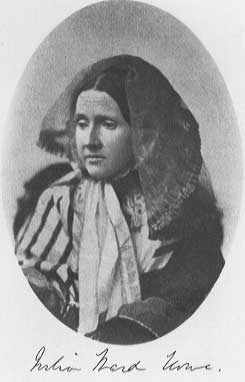 Arise all women who have hearts,
At one point Howe even proposed converting July 4th into Mother’s Day, in order to dedicate the nation’s anniversary to peace. Eventually, however, June 2nd was designated for the celebration. In 1873 women’s groups in 18 North American cities observed this new Mother’s holiday. Howe initially funded many of these celebrations, but most of them died out once she stopped footing the bill. The city of Boston, however, would continue celebrating Howe’s holiday for 10 more years.
Despite the decided failure of her holiday, Howe had nevertheless planted the seed that would blossom into what we know as Mother’s Day today. A West Virginia women’s group led by Anna Reeves Jarvis began to celebrate an adaptation of Howe’s holiday. In order to re-unite families and neighbors that had been divided between the Union and Confederate sides of the Civil War, the group held a Mother’s Friendship Day.


